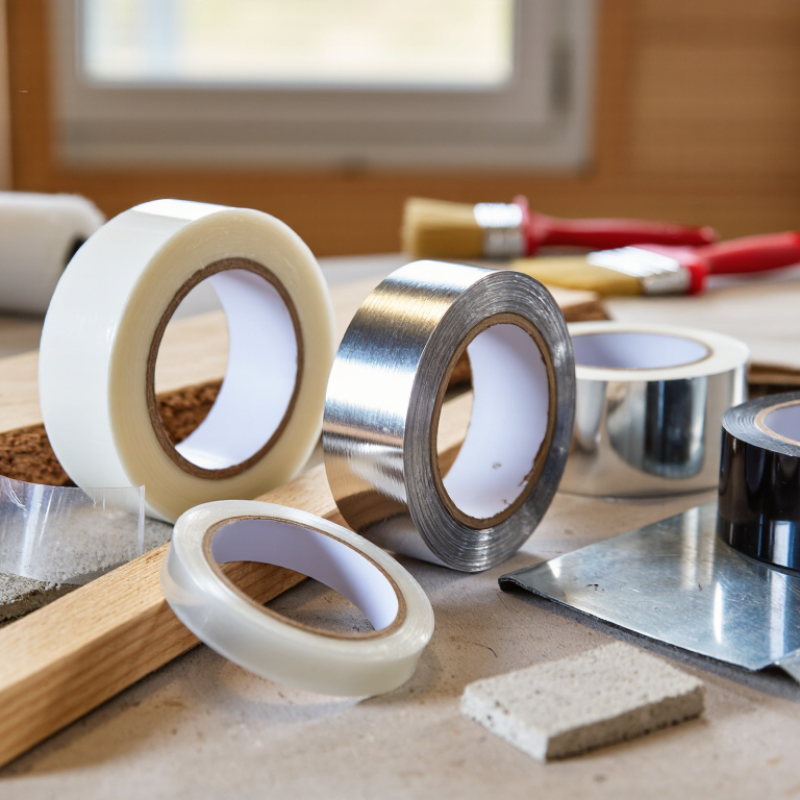
| Butyl Rubber Sealing Tape | Highly conformable butyl rubber adhesive, commonly supplied on a polyethylene, foil, or nonwoven carrier | Excellent | Medium to high, depending on the facing | Approximately −40°C to 90°C | Roofing joints, flashing, window and door frames, gutters, ducts, and sealed overlaps | Creates a flexible, pressure-sensitive moisture seal; adheres well to many smooth and slightly irregular surfaces | Can soften in high heat, collect dust on exposed edges, and require protection from direct sunlight when not UV-stabilized |
| Acrylic Adhesive Tape | Acrylic adhesive on a polyester, polyethylene, polypropylene, or foam carrier | Excellent when the bond is fully developed | Excellent | Approximately −40°C to 150°C, depending on formulation | Exterior mounting, solar and outdoor equipment, façade components, signs, trim, and long-term bonding | Strong aging resistance, good resistance to sunlight and oxidation, and reliable performance over a broad temperature range | Usually needs clean, dry surfaces and sufficient dwell time; initial adhesion may be lower than rubber-based adhesives |
| Silicone Self-Fusing Tape | Unvulcanized silicone rubber tape that fuses to itself when stretched and wrapped with overlap | Excellent after proper wrapping | Excellent | Approximately −50°C to 200°C | Electrical cable repair, hose and pipe protection, emergency sealing, and irregular or damp surfaces | Forms a resilient, insulating, and seamless rubber-like layer; performs well in moisture, heat, and outdoor exposure | Does not normally adhere permanently to most substrates; requires tension and overlap during installation |
| PVC Utility or Electrical Tape | Flexible PVC backing with pressure-sensitive rubber or acrylic adhesive | Good when wrapped correctly | Medium to high, depending on UV stabilization | Approximately −18°C to 105°C | Wire insulation, color coding, bundling, light-duty outdoor repairs, and temporary protection | Flexible, easy to tear or cut, conformable, and available in multiple thicknesses and colors | May shrink, harden, or lose adhesion with prolonged exposure; not ideal for permanent structural sealing |
| Polyethylene-Coated Cloth Tape | Woven or scrim-reinforced cloth backing with a polyethylene coating and rubber-based adhesive | Good for short- to medium-term exposure | Low to medium | Approximately −20°C to 60°C | Temporary repairs, bundling, outdoor maintenance, packaging, and surface protection | High tear strength, quick application, conformability, and good handling in maintenance work | Adhesive residue, edge lifting, and backing degradation may occur during prolonged sun, heat, or moisture exposure |
| Aluminum Foil Tape | Aluminum foil backing with acrylic or rubber-based adhesive; may include a reinforced or laminated structure | Excellent when edges are fully sealed | Excellent | Approximately −40°C to 150°C, depending on adhesive system | HVAC ductwork, insulation joints, radiant barriers, flashing, and outdoor thermal protection | Reflects radiant heat and light, resists moisture, and provides a durable vapor barrier | Can wrinkle or tear during installation; metal surfaces may require careful cleaning and firm pressure for bonding |
| Bituminous Flashing Tape | Rubberized asphalt or bitumen adhesive with an aluminum, polyethylene, or mineral-coated backing | Excellent | Medium to high when faced or coated | Approximately −20°C to 80°C | Roof flashing, foundation joints, skylights, pipe penetrations, and construction waterproofing | Thick, flexible, and effective for sealing overlaps and penetrations against bulk water | May soften in high temperatures; exposed asphalt products can degrade under sunlight and may stain porous materials |
| Polyurethane or Foam Sealing Tape | Open-cell or closed-cell foam carrier with acrylic, rubber, or modified adhesive | Good with closed-cell foam and sealed edges | Medium; exposed foam may need protection | Approximately −30°C to 90°C | Gasket replacement, vibration damping, weather-stripping, enclosure sealing, and gap filling | Compressible, useful for uneven surfaces, and effective for reducing air leakage and vibration | Open-cell versions can absorb water; compression set and exposed-edge aging can reduce long-term performance |