China Top 10 Horizontal Shaft Concrete Mixer Manufacturers?
China’s concrete equipment sector has expanded alongside urban infrastructure, industrial parks, roads, and renewable-energy projects. This growth has increased interest in reliable Horizontal Shaft Concrete Mixer suppliers. However, “top” should not mean the loudest online presence. It should reflect verified manufacturing capacity, mixing performance, export experience, service quality, and safety documentation.
Industry reports provide useful context. The Global Cement and Concrete Association highlights concrete’s essential role in global infrastructure and its urgent sustainability challenges. The International Energy Agency’s cement sector analysis also stresses lower emissions, energy efficiency, and improved production practices. Meanwhile, MarketsandMarkets’ Concrete Equipment Market research places mixers within a broader equipment category influenced by infrastructure investment, construction automation, and regional demand. These reports do not rank Chinese manufacturers directly. That limitation matters.
This guide therefore examines ten Chinese manufacturers through practical purchasing criteria. These include shaft design, blade configuration, discharge speed, batch capacity, motor protection, spare-parts access, and quality-control procedures. Factory audits, product catalogs, application records, and customer feedback should support each assessment. A mixer may look impressive in a showroom. Its performance can change when aggregates are wet, oversized, or poorly graded. Real jobsite evidence remains stronger.
The list is a research starting point, not a permanent verdict. Some companies publish limited data. Others may improve quickly. Buyers should request test videos, installation drawings, warranty terms, and recent project references before deciding. Small details often expose large differences. Reliability is measured after delivery.
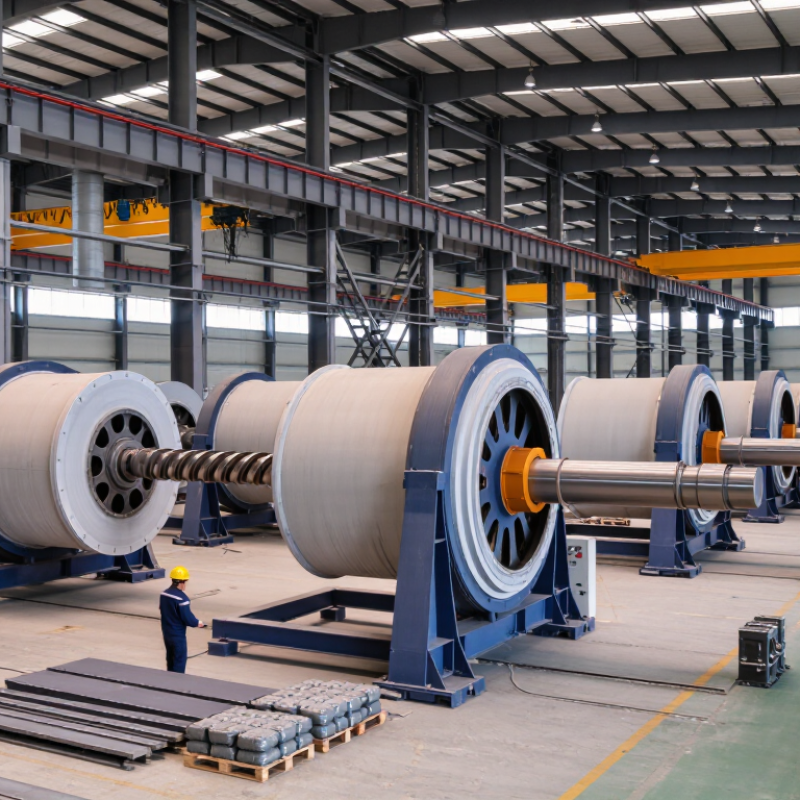
Horizontal Shaft Concrete Mixers: Definition, Design, and Working Principles
Horizontal Shaft Concrete Mixers: Definition, Design, and Working Principles
Horizontal shaft concrete mixers use one or two rotating shafts inside a trough-shaped chamber. Paddles fixed to the shafts lift, fold, and push material through the mixing zone. Cement, water, sand, and aggregate meet repeatedly, rather than moving in one simple circle. The result is usually a more uniform blend and shorter discharge time.
The design depends on shaft speed, paddle angle, chamber depth, and the gap between paddles and liners. A twin-shaft model creates overlapping mixing patterns. It also handles stiff concrete more effectively than many basic drum mixers. According to Grand View Research, the global concrete equipment market was estimated at about USD 20 billion in 2023, with continued growth expected through 2030. This expansion reflects rising demand for controlled batching and faster production.
Working performance still depends on operating details. A 2024 report by MarketsandMarkets identifies automation and process efficiency as major trends in concrete equipment. Moisture changes in sand can disturb the designed water-to-cement ratio. Small errors matter. ACI 304R also emphasizes controlled charging, mixing time, and uniform discharge. In practice, a mixer may meet its rated capacity yet produce uneven concrete when overloaded. That uncomfortable gap deserves more attention during equipment selection. Proper paddle wear checks, calibration, and trial batches remain essential.
Key Criteria for Evaluating Chinese Concrete Mixer Manufacturers
When comparing China’s top 10 horizontal shaft concrete mixer manufacturers, buyers should examine evidence rather than rankings alone. Grand View Research estimated the global concrete machinery market at approximately USD 16 billion in 2023. This growth increases supplier choice, but also creates uneven quality. Check audited production records, export experience, and verified installations. A factory tour can reveal more than a polished catalogue.
Mixing performance deserves close testing. Ask for batch capacity, mixing-cycle time, power consumption, and uniformity results. A horizontal shaft mixer should distribute cement, aggregate, water, and admixtures without visible dry pockets. Request test data under your actual mix design. ASTM C94 and relevant EN standards offer useful reference points, although local specifications may differ. Spare-parts availability matters. Inspect shaft seals, wear plates, bearings, and discharge gates before signing.
Reliability is measurable. The ISO Survey of Management System Standards reports millions of certified facilities worldwide, yet certification alone does not prove mixer quality. Confirm certificate scope and audit validity. Review warranty response times, remote support, and technician training. MarketsandMarkets has identified infrastructure investment as a major driver of concrete equipment demand, but demand figures cannot replace field evidence. Ask for three customer references and maintenance logs. Some suppliers may provide impressive output claims. They may also omit downtime. That omission deserves questions. A lower purchase price can become expensive when a worn liner stops production. Consider total cost over five years, not only the first invoice.
Product Features, Applications, and Industry Comparisons
Horizontal shaft concrete mixers are widely used in China’s construction equipment market. Their twin horizontal shafts create strong counterflow movement, helping cement, sand, aggregate, water, and additives blend evenly. Many models use wear-resistant paddles, sealed bearings, hydraulic discharge doors, and heavy steel frames. These features support frequent operation in demanding conditions.
In precast plants, the mixer can produce stable batches for wall panels, paving blocks, pipes, and concrete components. Construction sites may use smaller units for foundations, road repairs, and residential projects. A practical operator checks mixing time, discharge speed, cleaning access, and spare-part availability. These details often matter more than advertised motor power.
Compared with vertical mixers, horizontal shaft machines usually offer faster mixing and better handling of stiff concrete. Compared with planetary mixers, they may provide simpler maintenance and lower initial costs. However, mixing quality depends on paddle design, material moisture, loading order, and operator habits. A larger machine is not automatically better. It can waste energy when production remains small.
Field experience also reveals limitations. Abrasive aggregate can wear paddles sooner than expected. Poor sealing may allow cement dust into the bearings. Some product comparisons overlook cleaning time, which can delay the next batch. Buyers should inspect test results, safety systems, service records, and actual working conditions before selecting equipment. Specification sheets help, but they do not tell the whole story.
China Top 10 Horizontal Shaft Concrete Mixer Manufacturers: Industry Comparison
Typical batch capacity by application for horizontal-shaft concrete mixers
Horizontal-shaft concrete mixers are widely used in precast production, ready-mix concrete, road construction, concrete products, and small construction projects. The values shown are indicative industry ranges represented by typical midpoint capacities, rather than data from any individual company or brand. Larger capacities generally support higher production output, while smaller mixers provide greater flexibility for compact or specialized operations.