Why Choose Boom Crane Rental for Your Project?

Why choose boom crane rental for your next project? The answer often begins with flexibility, not price. A rented crane can support bridge repairs, commercial steelwork, and industrial maintenance without tying capital to equipment that may sit idle. The American Rental Association’s 2024 forecast placed U.S. equipment and event rental revenue above $75 billion, showing strong demand for temporary access to specialized machinery.

Construction schedules are also becoming harder to manage. The Associated General Contractors of America reported in its 2024 workforce survey that many contractors struggled to find qualified craft workers. A reliable rental provider can reduce equipment-related delays by supplying inspected machines, trained operators, and planned delivery support. On a crowded site, that matters. A boom crane arriving at 7:00 a.m. must clear gates, overhead lines, and nearby pedestrian routes safely.

Safety remains central. The International Powered Access Federation’s Global Safety Report highlights recurring risks involving poor planning, ground conditions, and operator error. Although a boom crane is not a substitute for competent supervision, the right rental partner can help verify load charts, outrigger placement, inspection records, and weather limits. These details are easy to overlook.

Rental is not automatically cheaper. That assumption needs testing. Transport distance, setup time, permits, fuel, standby hours, and operator costs can change the final figure. Still, boom crane rental may offer practical control when project duration, lifting capacity, or site conditions remain uncertain. This guide examines those advantages through measurable costs, field experience, and responsible planning.
Why Choose Boom Crane Rental for Your Project?

Understanding Boom Crane Rental and Its Main Applications

Why Choose Boom Crane Rental for Your Project?

Understanding Boom Crane Rental and Its Main Applications

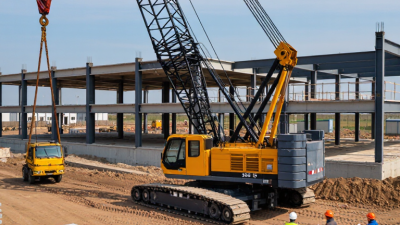
Boom crane rental provides lifting reach without requiring a company to purchase, store, and maintain heavy equipment. A boom crane uses an extending arm to move materials vertically and horizontally. Depending on the site, contractors may choose a telescopic boom, articulated boom, or truck-mounted model. Each type handles different access, height, and load requirements.

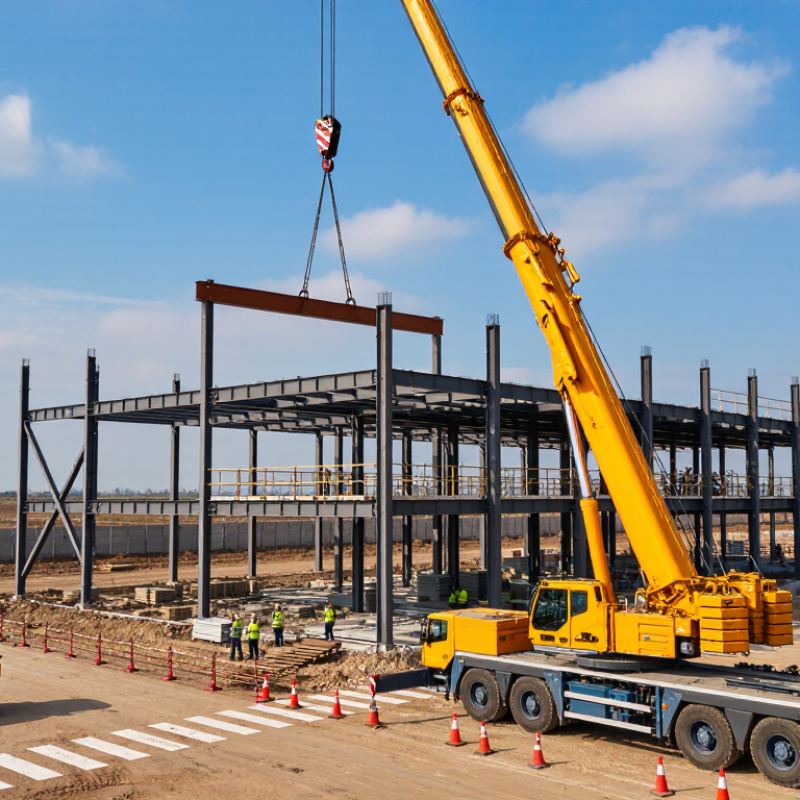
These cranes support steel placement, rooftop equipment installation, bridge maintenance, utility work, and large-scale concrete handling. On a crowded site, a truck-mounted crane can arrive quickly and reduce setup time. An articulated boom can reach over walls or around obstacles. Operators study load charts before lifting. They also check ground stability, overhead lines, wind speed, and the distance between the crane and load.

Small details matter. A generator lifted onto a roof may need precise control near fragile surfaces. A steel beam may swing if the rigging angles change. Trained crews use certified slings, clear communication, and a controlled exclusion zone. Rental providers should offer inspection records, qualified operators, and equipment matched to the project’s actual demands.

The planning is not always perfect. Early estimates can overlook narrow entrances or soft ground. A revised lift plan may be necessary. That is not wasted effort. It can prevent delays, equipment damage, and unsafe decisions during the lift.

Assessing Project Requirements Before Choosing a Boom Crane

Why Choose Boom Crane Rental for Your Project?

Assessing project requirements before choosing a boom crane prevents costly mistakes. Start with the heaviest load, lifting radius, height, and required placement accuracy. A 10-ton load may exceed a crane’s capacity when the radius reaches 25 meters. The load chart matters more than the advertised maximum capacity.

Review ground conditions, access routes, overhead lines, and nearby structures. OSHA’s crane standard, 29 CFR 1926 Subpart CC, emphasizes ground stability and power-line clearance. The U.S. Bureau of Labor Statistics has reported more than 1,000 fatal injuries in construction annually in recent years. This makes planning a practical safety requirement, not paperwork. A professional rental assessment should include load weights, rigging methods, wind limits, setup space, and emergency access. I sometimes see teams estimate these details too quickly. That is a preventable weakness.

Tips: Measure the tightest access point before requesting equipment. Confirm outrigger space with a site sketch. Ask for inspection records, operator qualifications, and maintenance history. Compare the working radius with the manufacturer’s load chart. Leave a margin for wind and unexpected movement. ASME B30.5 guidance also supports documented inspections and controlled crane operations. A short site visit can reveal problems that drawings miss. Almost every project has one overlooked detail.

Why Choose Boom Crane Rental for Your Project? - Assessing Project Requirements Before Choosing a Boom Crane

Project Requirement Typical Load Profile Required Working Height Recommended Boom Crane Type Typical Capacity Range Key Assessment Considerations
Roof-mounted HVAC installation Air-handling units, chillers, duct sections, and maintenance equipment 15–45 m Truck-mounted telescopic boom crane 10–80 tonnes Confirm roof access, lifting radius, outrigger space, overhead power lines, and the maximum load at the farthest reach.
Steel-frame construction Steel beams, columns, structural connections, and prefabricated assemblies 20–75 m All-terrain or rough-terrain boom crane 50–250 tonnes Review load charts, ground bearing capacity, site gradients, assembly sequence, and the required lifting radius.
Precast concrete placement Wall panels, floor slabs, stair units, and concrete beams 10–55 m Mobile telescopic crane 30–150 tonnes Allow for dynamic effects, wind limits, delivery-truck positioning, sling angles, and the maximum panel dimensions.
Bridge and infrastructure work Girders, reinforcement cages, formwork, pumps, and construction materials 15–60 m All-terrain or crawler crane 80–600 tonnes Evaluate travel routes, water or soft-ground conditions, traffic controls, lift-plan sequencing, and long-duration site access.
Industrial equipment relocation Generators, compressors, transformers, tanks, and production machinery 8–35 m Heavy-duty mobile or rough-terrain boom crane 40–300 tonnes Check doorway and route clearances, center of gravity, rigging points, floor loading, tandem-lift requirements, and installation tolerances.
Utility and wind-turbine maintenance Transformers, cable reels, components, tools, and replacement assemblies 20–120 m Telescopic boom crane with optional jib 30–300 tonnes Assess wind speed, boom configuration, access-road width, terrain stability, exclusion zones, and the need for precision placement.
Urban renovation and confined-site lifting Glass panels, façade sections, generators, roofing materials, and debris containers 8–35 m Compact truck-mounted or mini crawler crane 2–25 tonnes Prioritize compact dimensions, low ground pressure, noise restrictions, pedestrian protection, setup time, and limited outrigger clearance.

Comparing Rental Options, Equipment Types, and Service Terms

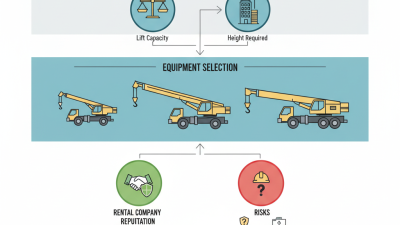
Choosing a boom crane rental starts with the worksite, not the advertised daily rate. A telescopic boom suits long horizontal reaches and open ground. An articulating boom helps around steelwork, pipes, and awkward rooflines. Rough-terrain cranes handle uneven sites, while truck-mounted units improve transport between locations.

Rental terms can change the real project cost. Compare weekly and monthly rates, delivery fees, fuel policies, operator requirements, and damage waivers. Ask whether inspections, emergency repairs, and replacement equipment are included. The American Rental Association’s 2024 forecast placed U.S. equipment and event rental revenue above 70 billion dollars, showing how widely rental models are used. Yet a low daily rate can still be the wrong choice. Downtime is expensive.

Safety terms deserve equal attention. OSHA recorded 395 fatal construction falls in 2022, reinforcing the need for controlled lifting and access procedures. Request current inspection records, load charts, maintenance history, and ground-pressure guidance. Confirm wind limits and clearance requirements before signing. Service response matters when a machine stops beneath a steel beam. A written response window is better than a vague promise.

Consider the full operating picture. Will the project need one machine, or several working at different elevations? Will an experienced operator be supplied? Some contracts reduce flexibility through strict return times or narrow usage limits. I would also question my first estimate, because access routes often look wider on drawings than on site. A short trial rental may reveal turning problems, surface damage, or insufficient reach before a longer commitment.

Evaluating Safety, Operator Expertise, and Regulatory Compliance

Choosing boom crane rental is less about availability and more about controlled risk.

The CPWR Data Center analyzed Census of Fatal Occupational Injuries records and identified 297 crane-related construction deaths from 2011 to 2020. OSHA also estimates about 72 crane-related worker deaths annually. These figures make operator competence and planning impossible to treat as paperwork.

A reliable rental provider should supply documented operator qualifications, equipment inspections, load charts, and a site-specific lift plan.

OSHA 29 CFR 1926.1400–1926.1442 requires qualified operators, competent signal persons, and controls near power lines. Ask who performs daily inspections. Check whether outriggers sit on suitable mats, not loose gravel. Small details matter.

Wind readings, ground pressure, swing radius, and communication methods need clear records.

The operator should explain the planned lift before the boom moves.

Very clearly.

A rental company can offer experienced personnel, but experience is not automatically proof of safe judgment. CPWR findings also show that struck-by incidents and electrocutions remain recurring hazards. A rushed lift can defeat good equipment.

I would question vague answers, missing certificates, or pressure to work beyond the manufacturer’s load chart.

On some sites, the weak point is not the crane. It is an undocumented assumption.

Managing Costs, Scheduling, and On-Site Crane Performance

Why Choose Boom Crane Rental for Your Project?

Managing costs begins with matching crane capacity to the actual lift plan. Renting avoids long-term ownership costs, including storage, maintenance, inspections, and asset depreciation. The American Rental Association’s 2024 Rentalytics forecast valued United States equipment rental revenue at approximately $78.7 billion. This growth reflects a practical shift toward flexible access instead of permanent ownership.

Still, rental is not automatically cheaper. A short-term booking can become expensive when permits, transport, standby time, and rushed changes are ignored. Small delays multiply.

Scheduling requires more than selecting an available boom crane. Confirm the lift radius, maximum load, ground conditions, access route, operator qualifications, and delivery window before signing the rental agreement. The Associated General Contractors’ 2024 Workforce Survey reported that 94% of construction firms struggled to fill salaried or craft positions. Reliable rental partners can reduce pressure through trained operators and dispatch support.

Yet, a crane cannot rescue an incomplete site plan. The weak point? Often, it is communication.

On-site performance depends on daily inspections, stable outrigger placement, accurate load charts, and realistic wind limits. The U.S. Bureau of Labor Statistics recorded 1,069 construction fatalities in 2023, reinforcing the need for disciplined planning and supervision.

Track setup time, utilization, idle hours, and weather interruptions. These details expose waste that an initial estimate may miss. A well-managed rental gives the project flexibility, but the final result still depends on careful decisions made before the crane arrives.